Pool safety for children depends on an alert adult watching, four-sided fencing, and gates that close and latch automatically. Drowning leads unintentional injury deaths among children ages 1 to 4, according to CDC drowning risk information.
Visiting families need clear access rules because children may approach the water when nobody expects swimming. The first step is assigning responsibility before guests arrive.
Key takeaways
- One designated adult should supervise swimmers without distractions.
- Four-sided barriers and dependable gates limit unexpected access.
- Swimming lessons, alarms, and covers add protection but never replace an attentive adult.
Pool safety for children starts with assigned supervision
Designate a Water Watcher
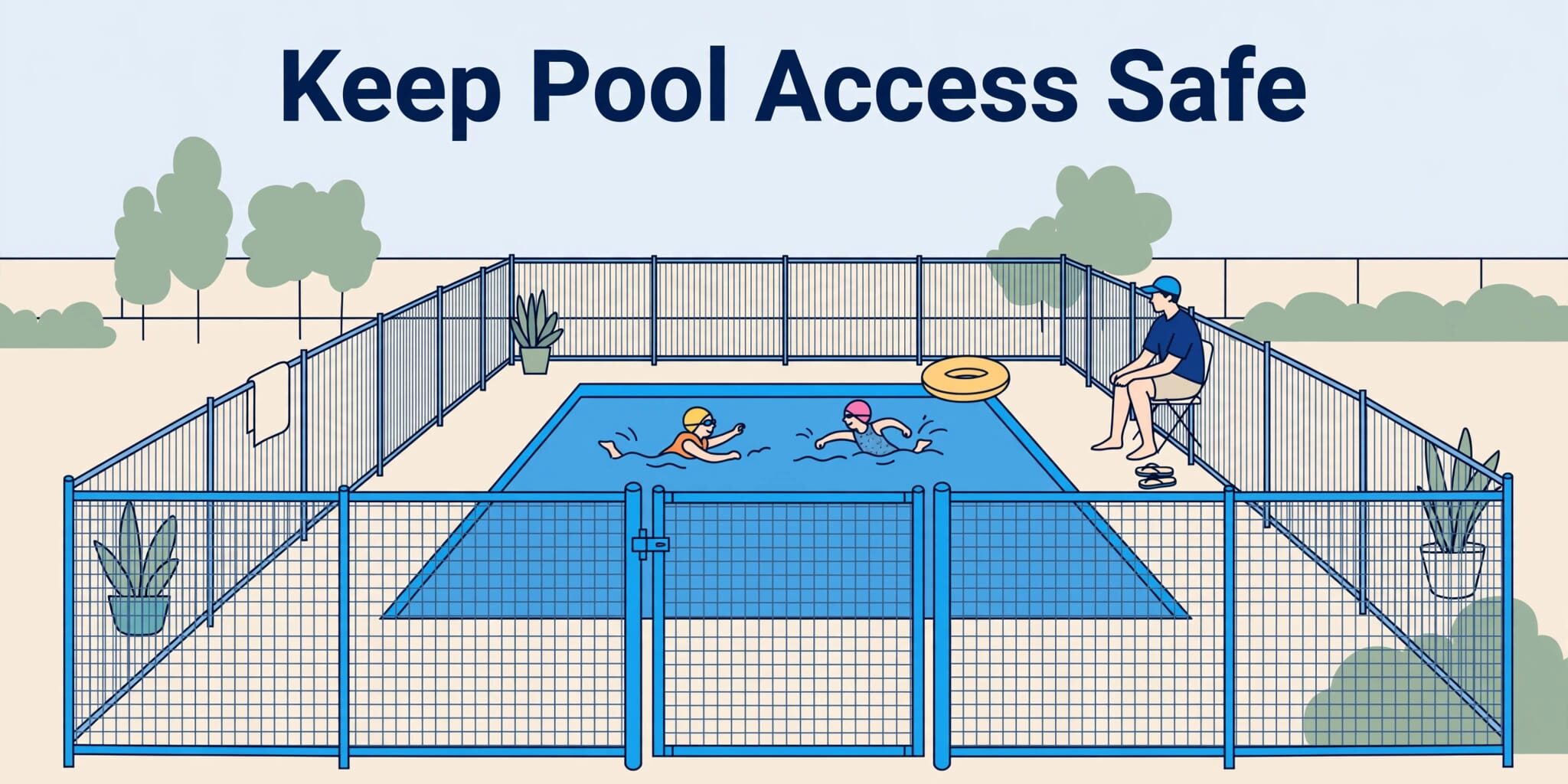
Before swimming starts, the host should name an official Water Watcher. That adult’s only task is watching children, without using a phone, reading, or playing games.
During gatherings, adults should transfer responsibility directly instead of assuming someone else has taken over. The next adult should confirm the handoff before the first watcher leaves.
Parents remain responsible even when lifeguards are nearby. An empty lifeguard chair leaves coverage gaps, and other swimmers can block a seated lifeguard’s view.
Keep younger children within reach
Adults should use touch supervision with young children under five and weak swimmers, staying within arm’s reach throughout swimming.
A caregiver watching from a patio chair can’t provide immediate protection. The supervising adult should enter the water when needed.
Before arrival, hosts should ask caregivers about swimming ability and explain household pool rules. They should confirm who will watch swimmers. Children must not approach the water unless the designated adult is watching. Babysitters and grandparents need the same instructions as parents.
Block unexpected access with fencing and gates
Separate the pool from the home
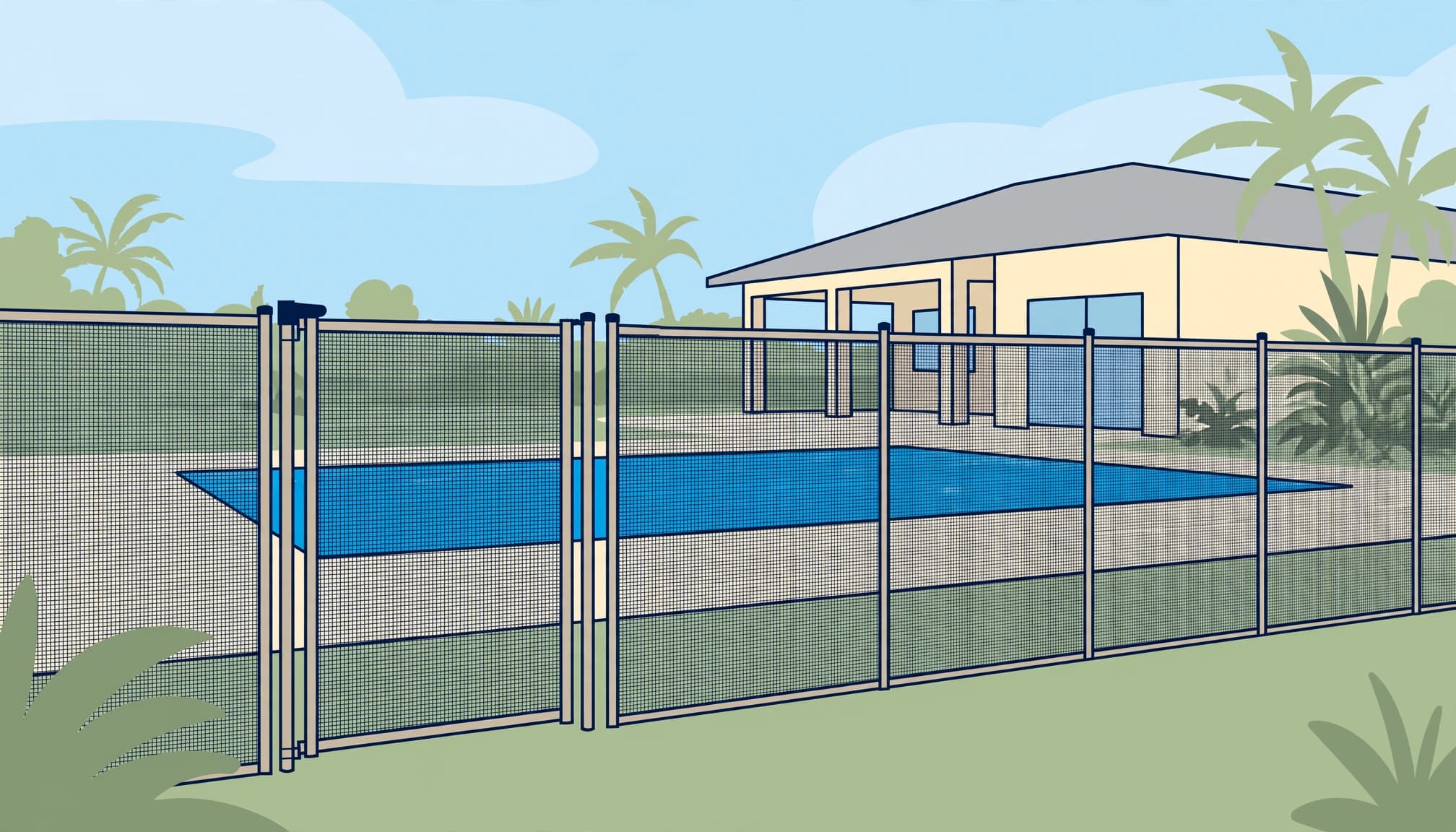
A complete barrier should stand at least 4 feet high and surround the pool on all four sides. It must separate the water from the house and play area, consistent with AAP water safety guidance, to reduce the risk of water-related injury.
Removable mesh pool fences use support poles, deck sleeves, and tensioned fabric while preserving views of the water. The planned route should block approaches through the lanai, patio, and side yard.
For child safety, homeowners should keep furniture and other climbing aids away from the barrier. Intact mesh and secured sections also support pet safety.
For Southwest Florida properties, homeowners can request a pool fence estimate for a layout-specific plan.
Test closing and latching separately
A pool fence needs a self-closing, self-latching gate that opens outward. It must close automatically and latch without assistance. Latches must sit above children’s reach.
Self-closing hinges move the opening shut, while self-latching hardware secures it. An opening that looks closed may still leave access open.
Before each visit, an adult should let the opening close without pushing, then gently test whether the latch engaged. Repeat this operating check after heavy rain, deck work, or fence reinstallation.
A dragging opening or missed latch needs professional attention before anyone relies on that entrance. Guests should never prop an entrance open.
Secure the pool as swimming ends
The American Red Cross reports that many victims of home-pool submersion incidents were out of sight for less than five minutes. These incidents often happen outside swim time or as swimming ends.
Therefore, one adult should continue watching children while another clears the pool and closes access. Toys should leave the water because they can attract children back. Never leave a young visitor unattended near the pool.
Door alarms, pool alarms, and a rigid safety cover that meets ASTM International standards add protection. However, they don’t replace four-sided fencing.
The host should account for every child before ending supervision. Then, an adult should secure the gate and keep children away during cover operation. Keep pool access secured during non-swim times, including meals and departure.
Add swim skills and prevent drain injuries
Swimming lessons support water competency and drowning prevention and can help children become water competent. Age-appropriate swimming lessons build swim skills, but they don’t remove the need for an alert adult or replace secure access.
Adults shouldn’t rely on water wings, swim rings, or inflatable toys instead of watching children. Properly fitted, U.S. Coast Guard-approved life jackets provide flotation support, but adults must still supervise.
Drain safety also matters. Adults should inspect each drain cover for damage or missing parts. A damaged or missing cover can cause suction entrapment, trapping hair, limbs, jewelry, or swimsuits. Keep children away from drains, and don’t allow swimming if a cover is damaged.
Before children use a pool or spa, supervising adults should locate the emergency vacuum shutoff. Guests also need to understand that drains aren’t play features.
Prepare adults for a water emergency
If a child goes missing, adults should check the water first because seconds matter. For a suspected submersion, someone should call 911 immediately and follow the dispatcher’s instructions.
Bystanders often provide the first help, so caregivers should learn CPR and keep their certification current. Training prepares adults to respond without losing time searching for instructions.
Keep a charged telephone and rescue equipment beside the pool, where supervising adults can reach them. Before guests arrive, adults should identify the pool address and locate the phone and rescue equipment.
Babysitters and visiting grandparents need the same emergency information.
Common questions about secure pool access
Does every removable mesh opening close automatically?
Manual openings require an adult to reconnect and secure the fence. A dedicated self-closing gate handles closing automatically, but adults still need dependable latch engagement.
What happens if the fence has damage?
Torn mesh, loose posts, or damaged anchors require professional assessment before the household relies on the barrier again. Tape and household patches don’t restore dependable protection.
Keep protection in place throughout the visit
Secure access depends on a complete barrier, a reliable secured entry, and an adult responsible for watching the water. Keep those protections in place through meals and departure. Before leaving, confirm every young visitor has left, remove pool toys, and restore secure access.
Homeowners considering removable mesh fencing can Schedule a Consultation for a free installation quote. A properly planned barrier supports safer visits, while consistent adult supervision remains essential.