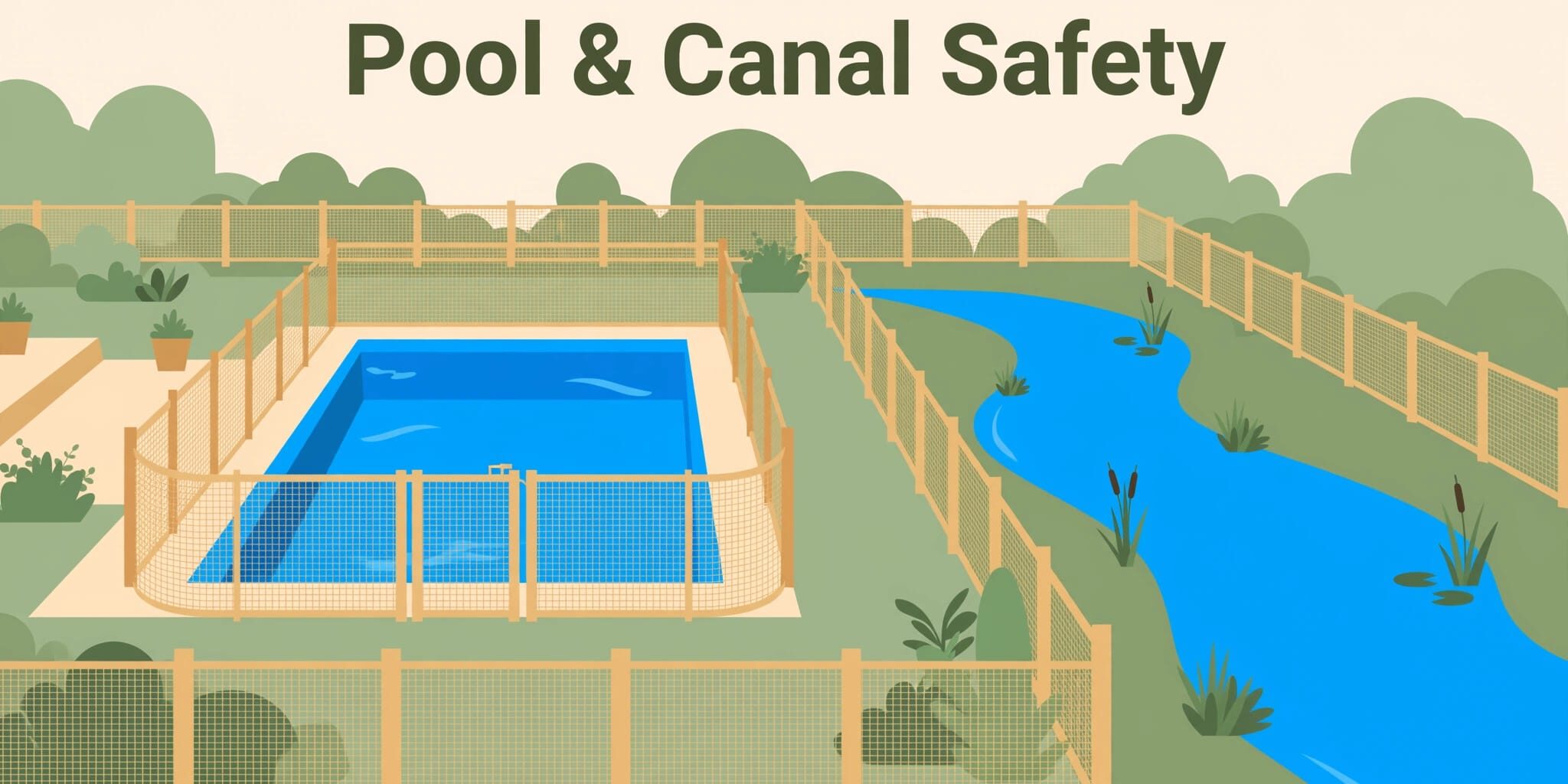
Adding a barrier between a backyard pool and canal starts with a continuous fence route and secure gates. The layout must address both water hazards, not just divide the view.
Removable mesh offers visibility and controlled access, but placement determines which approaches the barrier blocks. A practical plan starts with the fence line, then addresses materials, mounting, and daily operation.
Key Takeaways
- A divider between two water hazards doesn’t automatically create a complete pool enclosure.
- Removable mesh preserves backyard visibility while limiting unsupervised access when correctly installed and secured.
- Secure gates, sound mounting surfaces, and active adult supervision remain essential.
Plan the Pool and Canal Barrier Together
Block access around the fence ends
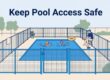
A straight fence between the pool and canal won’t stop children reaching either hazard around its ends. Sketch the pool, canal edge, house or lanai, side yard, and dock before choosing a route.
Trace a continuous route that blocks access around both fence ends. Mark gates and everyday paths through the house, lanai, side yard, and dock.
Meanwhile, waterfront protection needs its own continuous route. A pool enclosure can leave the canal accessible elsewhere in the yard.
A pool barrier can separate the pool from the canal while leaving an unprotected route to both.
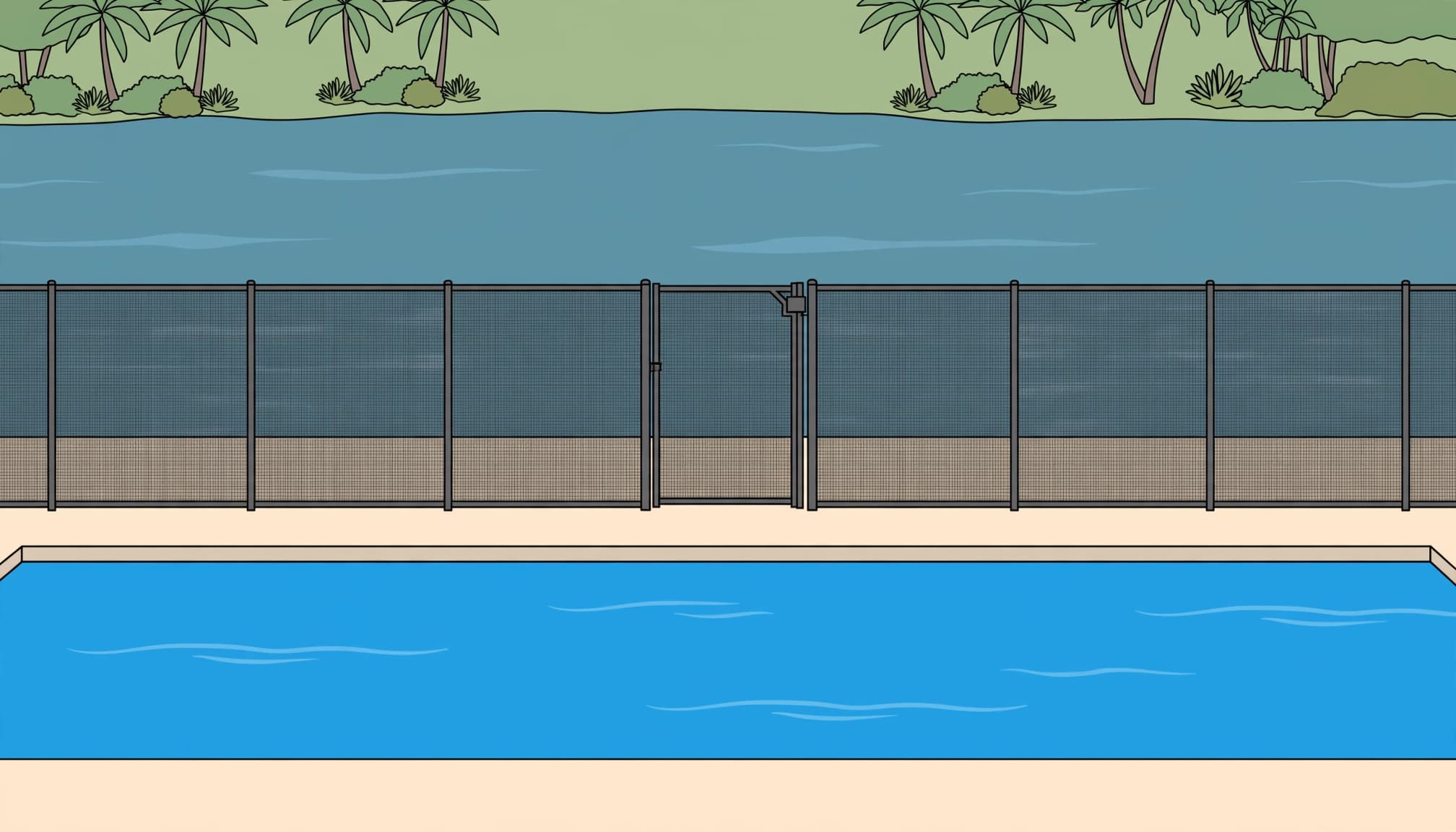
Before finalizing the route or drilling into a seawall, confirm ownership, easements, canal-authority restrictions, and permit requirements. Coordinate early with the canal authority and local pool-safety officials.
Choose dependable mounting surfaces
Installers need stable support for sleeves, posts, and gate hardware. Loose pavers, soil, and damaged concrete may require different mounting arrangements.
Have a professional assess seawall caps and retaining structures before drilling. A pool fence isn’t automatically suitable as seawall fall protection. Keep dock access on a secured route that doesn’t bypass the pool barrier.
Compare Barrier Materials for Waterfront Use
Each option balances views, screening, and maintenance differently.
| Barrier option | Practical benefit | Important limitation |
|---|---|---|
| Removable woven mesh | Keeps water visible and allows controlled section removal. | Requires correct tension, anchors, and secured connections. |
| Perforated panels, including pool perf | Tiny perforations limit footholds while allowing views and air flow. | Views and screening vary by panel design. |
| Frameless glass | Offers uninterrupted waterfront views. | Needs compliant construction and a self-closing, self-latching gate. |
| Tubular aluminum | Lightweight tubular aluminum fencing is common and cost-effective. Its corrosion-resistant, low-maintenance performance depends on its finish and waterfront exposure. | Offers limited screening between vertical members. |
| Timber or metal battens | Timber or metal vertical batten fencing supports a custom outdoor design and can create a privacy fence. | Spacing and construction must meet applicable barrier requirements and limit climbability. |
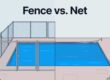
Removable mesh pool fences differ from rigid perforated panels. Neither material makes a barrier childproof.
For budgeting, total fence length matters more than pool dimensions alone. Gates, surface changes, and anchor work also affect installation costs. Southwest Florida homeowners can request a free pool fence estimate for a layout-specific proposal.
Apply the Correct Pool Safety Requirements
Florida height, perimeter, and gates
Florida’s residential pool barrier requirements specify a minimum height of four feet, measured outside the barrier.
Before finalizing the fence route or drilling into a seawall, confirm local pool codes, permit requirements, and canal-authority rules. These local approvals are separate from the cited statute.
The statute also requires pool-access gates to open outward, self-close, and self-latch. Barriers must prevent children from crawling under, squeezing through, or climbing over them.
A canal-side yard fence counts only when it meets barrier requirements and forms part of the pool perimeter. An existing waterfront fence doesn’t automatically satisfy pool requirements.
Australian standards apply separately
Australian projects follow jurisdiction-specific requirements, including applicable editions of AS1926.1.
Standards Australia’s AS 1926.1:2024 guidance describes pool-barrier design and performance requirements under this Australian standard. These Australian standards don’t govern Florida installations.
For Australian planning, Pool Safety Network offers barrier design advice and compliance checks. Pool Safety Network can also support a project review before you settle on a barrier route.
Its Pool Design Pack advertises 3D renders, video walkthroughs, and builder-ready plans, including a 3D walkthrough for design review. Review the Pool Design Pack with your installer to check the proposed barrier route against site conditions. Discuss the proposed layout in the Pool Design Pack before applying for permits.
Install Mesh for Reliable Daily Access
Fit the route and tension correctly
Before final measurements, coordinate nearby planting and landscaping so neither blocks access nor creates climbing aids. Installers measure the full fence route, including corners, surface changes, and the gate opening. They position sleeves and posts to maintain secure connections and consistent mesh tension.
Concrete, pavers, turf, and slopes need mounting details suited to their support conditions. Professional installation also accounts for gate clearance and nearby climbing aids.
Keep furniture and movable planters away from the barrier because children can use them as steps.
Separate automatic gates from manual openings
Test automatic gates to confirm the gate closes automatically and the latch engages without assistance. Self-closing hinges shut pool fence gates, and self-latching hardware secures them afterward.
However, an adult must reconnect and secure a removable manual opening after passing through. It doesn’t close automatically.
A gate that drags or misses its latch needs service. Pet safety also depends on intact mesh, secure connections, and suitable gaps.
Frequently Asked Questions
Can lattice panels provide pool privacy?
Homeowners can buy ready-made lattice-style privacy panels or build framed lattice screens. However, ordinary lattice can provide climbing footholds.
A decorative screen doesn’t automatically qualify as a pool barrier. Its openings, framework, placement, and climbability must suit the applicable requirements.
That screening also reduces visibility, so its location matters around supervised swimming areas.
How should waterfront mesh fencing receive maintenance?
Rinse mesh with fresh water and use mild soap for dirt. Inspect stitching, posts, anchors, and connections regularly.
Also repeat gate-operation tests after heavy rain, landscaping, deck work, or fence reinstallation. Torn mesh, loose supports, and faulty latches require professional attention before the household relies on the barrier again.
Keep Both Water Hazards Behind Secure Boundaries
A dependable layout addresses access to both the pool and canal. Continuous protection depends on the fence route, stable anchors, and secure gates.
Removable mesh supports visibility and convenient access, but no barrier replaces close, constant adult supervision.
Homeowners considering installation can Schedule a Consultation for a free quote and a discussion of their waterfront layout.