Check pool gate self-closing performance: a self-closing pool gate should swing shut and latch when released without a push.
A gate that looks closed may still leave the pool accessible if its latch hasn’t engaged. Test unassisted closing first, then check the latch gently.
Key Takeaways
- A self-closing gate must complete its swing without an adult’s help.
- The latch must engage automatically and resist opening until someone operates its release.
- Dragging, incomplete closing, or missed latching requires service before the household relies on the barrier again.
Understand the Two Separate Gate Functions
Self-closing hinges move the gate
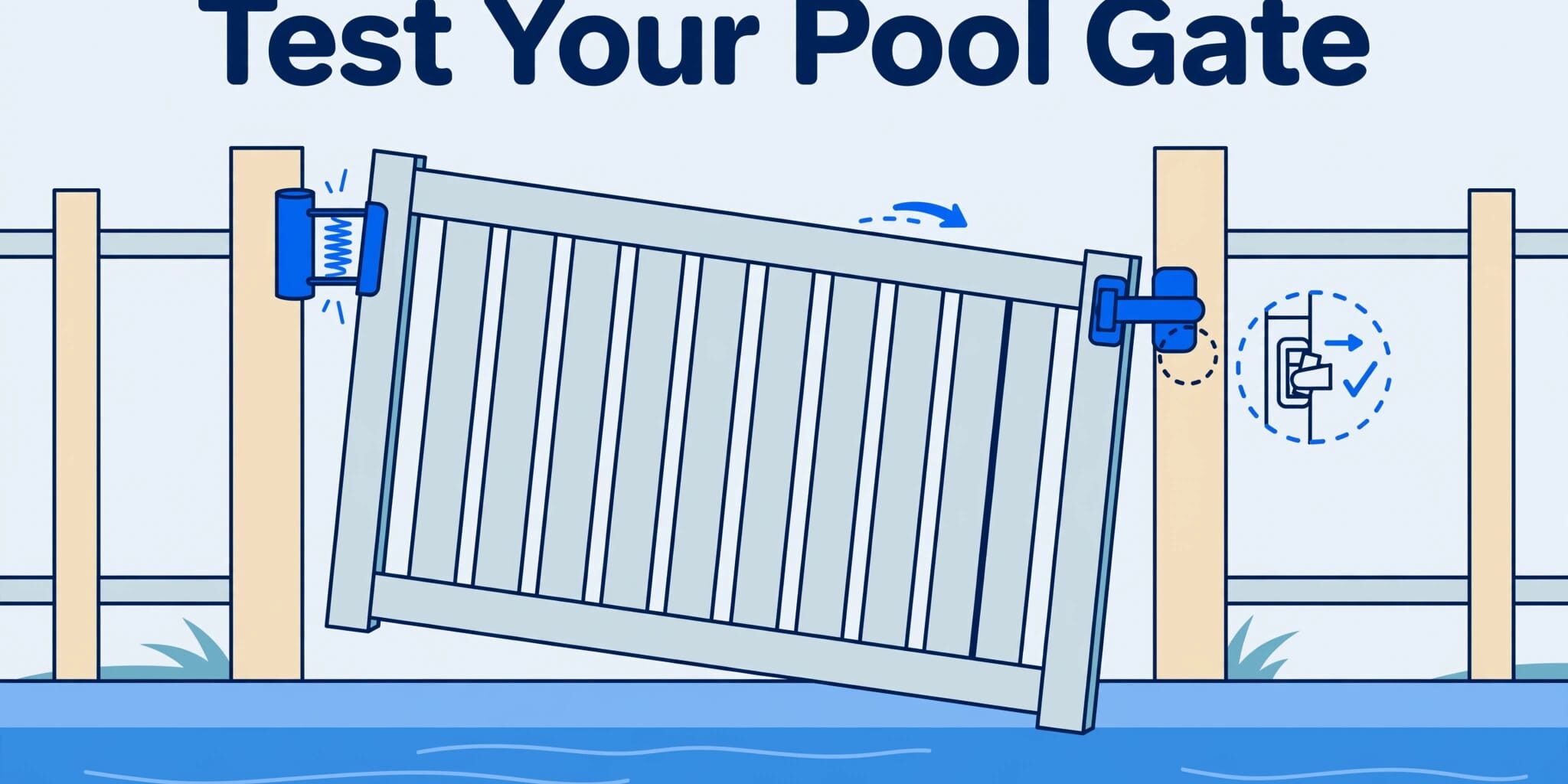
Self-closing hinges return an open gate to its closed position. Spring-loaded hinges, heavy-duty hinges, and Tru-Close models have model-specific adjustment guidance, so follow the instructions for your hardware. Closing movement alone doesn’t prove that the entrance is secure.
For a mesh pool fence, surrounding posts and fence tension also affect alignment. A leaning support or a bent aluminum gate frame, even one made of powder coated aluminum, can interfere with the closing path.
Self-latching hardware secures the entrance
The latch catches automatically when the gate reaches its closed position. Afterward, an adult must operate the release to reopen it. Magnetic latches must still engage automatically when the gate closes.
A key lock adds another access control, but automatic latching and key locking perform different jobs. Under Florida’s residential pool barrier law, pool-access gates must open outward and include self-closing, self-latching locking hardware.
Test the Gate Without Helping It Close
Before testing, keep children and pets away from the entrance. Inspect the gate and latch, then clear furniture, toys, and debris from the swing path.
Whether the gate has a magnetic latch, a Magna Latch, a release knob, or is key lockable, use the same test. These checks assess everyday operation, not formal code compliance or certification.
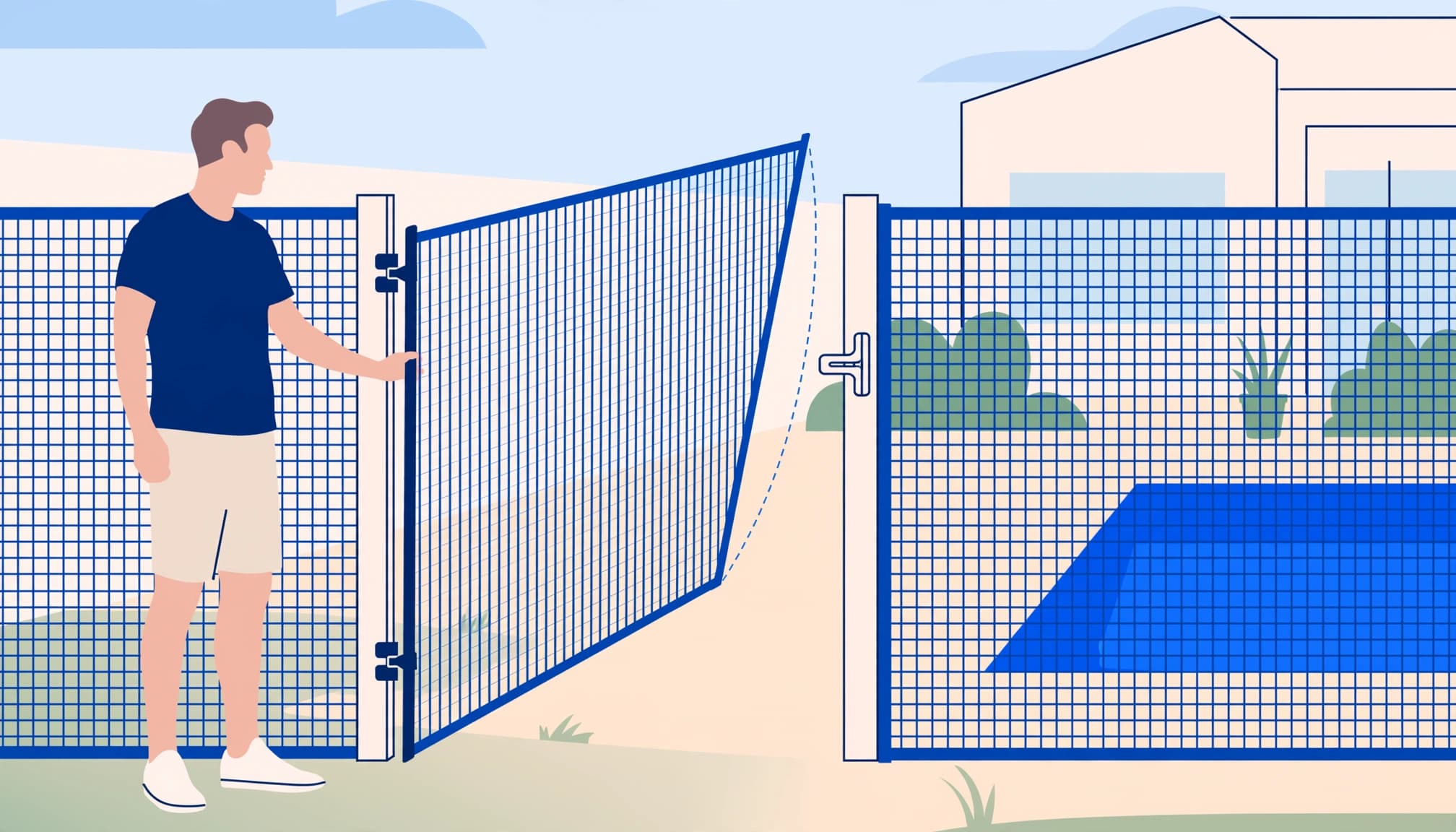
- Open the gate nearly closed, then release it without pushing. Watch it close fully and check that the latch catches.
- Repeat from a wider opening. The gate should close without dragging, stopping, or bouncing away, and the latch should catch.
- Gently pull the closed gate without touching the latch release. The latch should hold it closed.
- Repeat both release checks to confirm the gate closes and latches every time.
- Operate the release, pass through normally, and watch the gate close and catch behind you.
Starting near the closed position can reveal a gate that needs extra momentum to latch. A wider opening tests more of the swing path.
A gate that latches only after a shove hasn’t demonstrated reliable automatic operation.
Use this checklist to assess the results:
- Pass if the gate closes fully and the latch catches every time.
- Fail if the gate closes slowly or incompletely, drags, bounces, or misses the latch.
If the latch has a key lock, test it separately after confirming automatic latching. A successful lock test doesn’t make up for a failed closing test.
Recognize Problems That Need Service
Dragging or stopping before the latch
A slow or incomplete close can point to misalignment, loose hardware, or an obstruction beneath the frame. Clear loose debris, then check internal hinges and Tru-Close components for visible wear without adjusting them.
If the gate still drags, check for bent or shifted powder coated aluminum frame parts. Stop relying on the gate until the fault is corrected. Increasing closing force won’t fix an alignment problem.
Also inspect nearby mesh, stitching, posts, and deck sleeves for visible damage. Surrounding fence damage can compromise child safety even when the gate moves.
Closing without catching securely
A gate may reach the latch but fail to engage because its parts no longer line up. Repeated bouncing, partial engagement, or opening without release operation warrants professional attention.
A hardware kit for a DIY pool gate won’t correct a misaligned frame or faulty latch. Don’t bend latch components, improvise repairs, or use a key lock to compensate for failed automatic latching. Pool fence gates need dependable operation during ordinary daily access.
A service call may correct alignment or latch problems without replacing the gate. Ask for an estimate before comparing the pool gate cost of replacement.
For installation planning, Southwest Florida homeowners can request a mesh fence estimate. A professional assessment can address the gate opening and surrounding barrier together.
Understand What the Test Doesn’t Prove
A successful movement test on a 4 ft pool gate doesn’t establish compliance with the full pool safety code. Gate movement alone doesn’t verify barrier height, release placement, or anchoring, including concrete mounting.
Florida Statutes require a residential pool barrier at least 4 feet high, measured on its outside. The statute also addresses release placement to limit child access over or through the barrier and reduce unsupervised access to the pool.
Miami-Dade’s pool barrier guidance addresses access gates and other pool-entry protections. These requirements extend beyond whether a gate swings shut and cover other parts of the safety code.
Removable mesh barriers may satisfy Florida requirements when their design, installation, gate, and placement meet applicable rules. A homeowner’s operating test doesn’t replace installation approval.
Frequently Asked Questions
When should homeowners repeat the test?
A quick operating check belongs in the household’s pool-access routine. Also repeat it after heavy rain, landscaping, deck work, or fence removal and reinstallation.
Those events can affect clearance, alignment, or nearby supports. After any visible damage, a professional should assess the gate and surrounding fence before the household relies on them.
Does every removable mesh opening close automatically?
No. A manual opening requires an adult to reconnect and secure the fence after passing through. It doesn’t provide automatic closing.
Therefore, homeowners should distinguish a manual access point from a dedicated self-closing, self-latching gate. Both require proper securing, while the automatic gate also needs an unobstructed swing path.
Keep Automatic Closing Dependable
A reliable gate completes its closing movement and holds securely without an adult’s help. Testing both functions provides a clearer answer than watching the gate swing.
However, constant adult supervision remains necessary even when the fence is closed. For pet safety, the surrounding barrier must also prevent access through damaged or unsecured sections.
Homeowners considering a professionally installed removable mesh barrier can Schedule a Consultation for a free installation quote.