
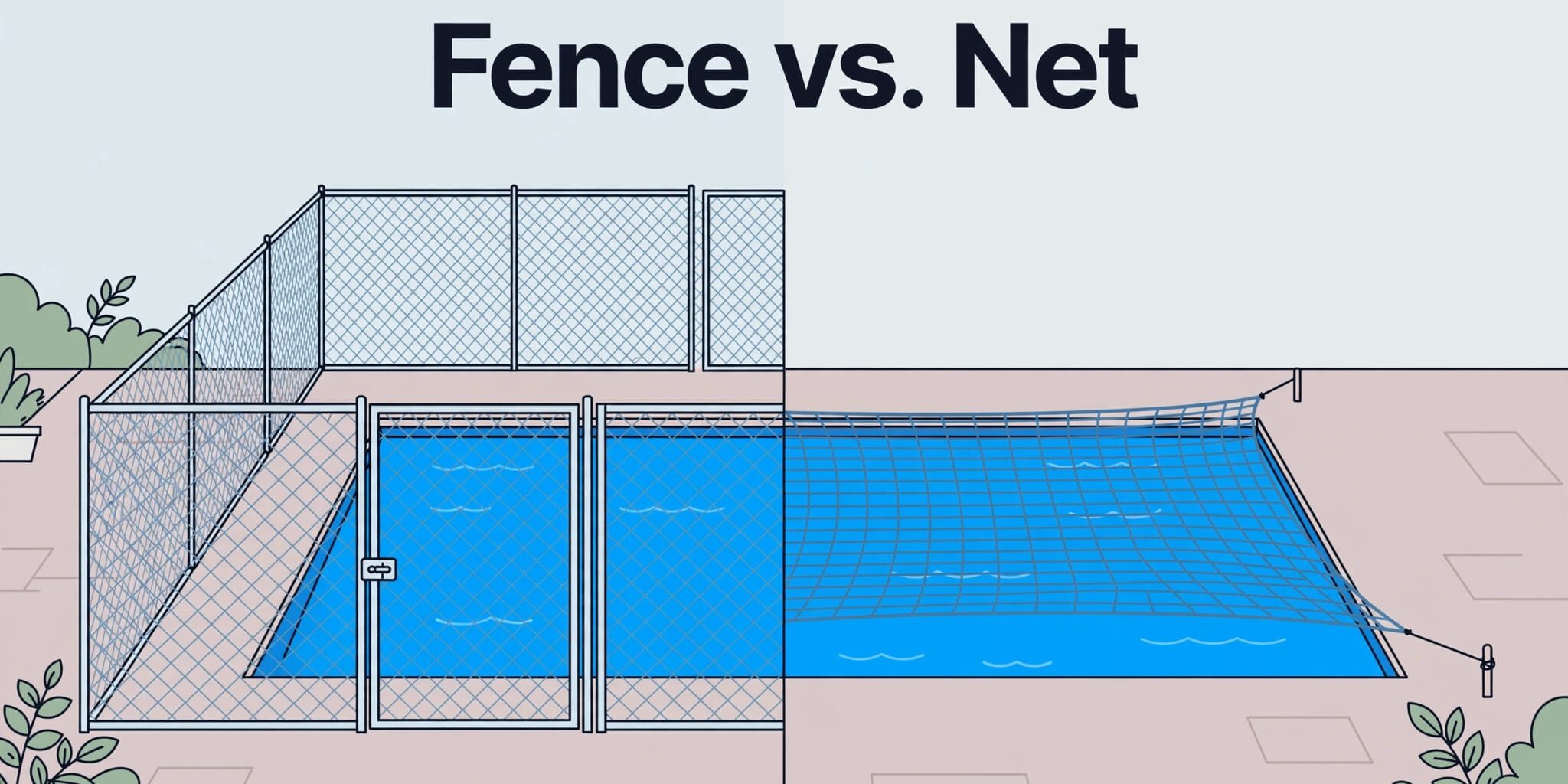
A mesh pool fence blocks access to the pool area, while a pool safety net stretches across the water. For frequently used pools, a fence generally offers simpler daily access because adults don’t remove the entire barrier.
Both options depend on correct installation and consistent use. The practical differences begin with how each barrier protects families and how adults restore protection after swimming.
Key Takeaways
- Mesh fences help separate children and pets from the pool deck and water.
- Nets leave the deck accessible but require removal before swimming and secure re-tensioning afterward.
- Neither option replaces constant adult supervision, secure access habits, or additional protection such as alarms.
How Each Barrier Protects the Pool
Mesh fences control access
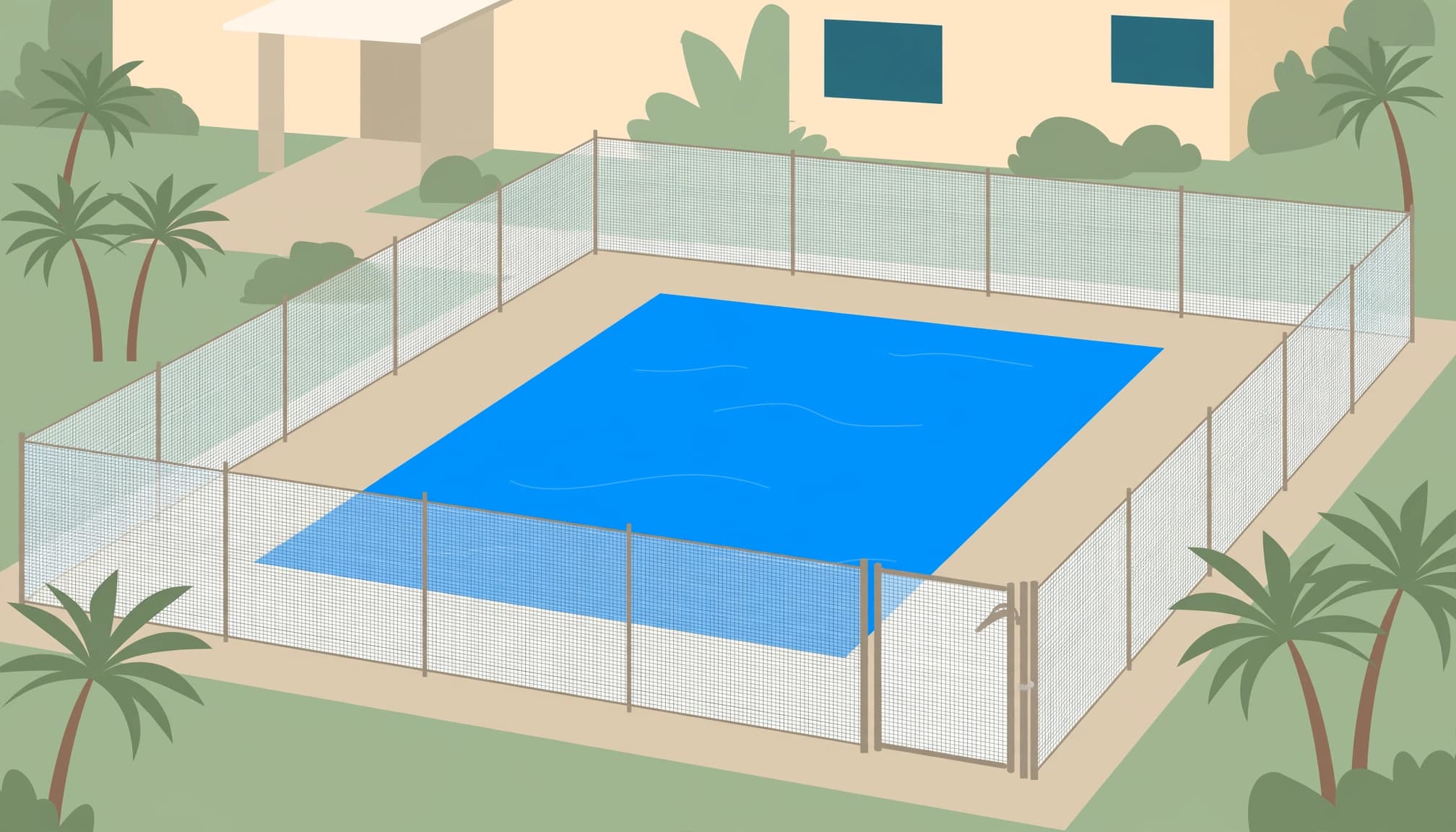
Removable mesh pool fences use tightly woven fabric, support posts, and deck sleeves to create a boundary. Transparent mesh preserves views across the backyard.
A planned route can block access from the home, side yard, patio, or lanai. Meanwhile, pool fence gates provide controlled entry without removing fence sections.
For child safety, InterNACHI’s pool barrier guidance limits openings to prevent a four-inch sphere from passing through.
A pool safety net covers the water
A pool safety net uses tensioned mesh over the water to help prevent children and pets from sinking beneath it. Deck anchors connect to a Central Tension System or another pulley or ratchet arrangement.
Openings typically measure around 3.5 inches, designed to prevent a toddler’s head from passing through. Katchakid cites a minimum 485 lbs rating, but load capacity doesn’t make a net safe for walking or play.
For pet safety, small animals require particular attention because their dimensions differ from toddlers.
Installation Costs and Daily Convenience
A planning range for professional pool safety net installation is $1,500 to $4,000, averaging roughly $2,600. Pool size, freeform shapes, and deck layout affect the total.
Fence pricing depends on total fence length, gate selection, deck material, and anchor work. A project-specific fence estimate accounts for those differences rather than relying on pool dimensions alone. When comparing a Katchakid quote with other options, check whether it includes anchors and deck work.
For daily swimming, a gate-equipped fence allows access while the remaining barrier stays installed. However, a net requires complete removal before anyone enters the water.
Families should plan convenient storage for the net and roller, and allow time to replace the net after every swim. A net left rolled beside the pool provides no protection.
What Professional Installation Involves
Preparing the pool area
Katchakid describes average-sized net installations as one-visit projects lasting four to seven hours. Standard residential mesh fence installations often take one day.
For net installation, Katchakid requests approximately 24 inches of clear working space around the pool. Preparation also includes running water and a working electrical outlet within about 200 feet.
For new or resurfaced pools, Katchakid may require at least five curing days before installation. Actual curing requirements depend on the materials and project.
Both systems need careful measurements. Installers use custom-fitted nets to follow freeform layouts around the pool edge, raised spas, and rockwork, while fence layouts account for walkways and gate clearance.
Fitting, tensioning, and handover
First, the net installer plans the layout and marks close, evenly spaced anchor positions. Katchakid uses a water-fed Hilti diamond core drill and sets anchors flush or nearly flush with the deck.
Next, the installer spreads and tensions the mesh, then trims its shape with a heated cutting tool. Double edge binding, closed fasteners, and finished edges complete the fitting.
Where installations meet the requirements, Katchakid applies ASTM F1346-23 labels. That labeling doesn’t automatically establish local code approval.
Finally, a Katchakid technician demonstrates net removal, replacement, and tensioning. Fence handover should likewise include gate operation and correct section removal and reinstallation.
Gate Habits, Maintenance, and Safety Limits
The CPSC’s residential pool barrier guidelines recommend outward-opening, self-closing, self-latching gates and barriers at least four feet high. A gate that drags, stays open, or misses its latch needs service.
Nets should complement fences, alarms, and close supervision rather than replace them.
A net’s load rating doesn’t address unattended access to the surrounding pool deck.
Regularly inspect mesh, stitching, posts, anchors, and gate operation. Homeowners can rinse fence mesh with fresh water and use mild soap for dirt.
Damage, sagging, or loose hardware requires attention before anyone relies on the barrier again. No barrier is childproof, and none replaces close, constant adult supervision.
Frequently Asked Questions
Can one adult remove and replace a net from the usual access point?
One trained adult can generally operate the net’s roller and tensioning equipment from the usual access point. Katchakid lists approximately three to five minutes for removal and five to eight minutes for replacement.
However, physical ability, pool layout, and familiarity affect convenience. The handover demonstration helps the operating adult understand the full process before relying on the system.
Does a swimming pool net keep the pool clean?
The openings in a pool net cover let leaves and smaller debris through, so it doesn’t control debris like a solid pool cover.
A separate debris cover has a different purpose and doesn’t automatically provide drowning protection. Loungers and other movable furniture also need positions that don’t create climbing access over a fence.
Choose Protection That Fits Everyday Use
An All-Safe mesh fence and a pool safety net have different daily handling needs. A mesh fence generally suits families who want controlled access without removing a water-covering barrier before every swim. A net requires a reliable removal and re-tensioning routine.
Ask whether the layout blocks routes from the house and whether your household can keep the chosen barrier properly secured whenever the pool isn’t in use. Also consider whether net handling fits your daily routine and budget.
Homeowners considering removable mesh fencing can Schedule a Consultation for a free installation quote and layout discussion.